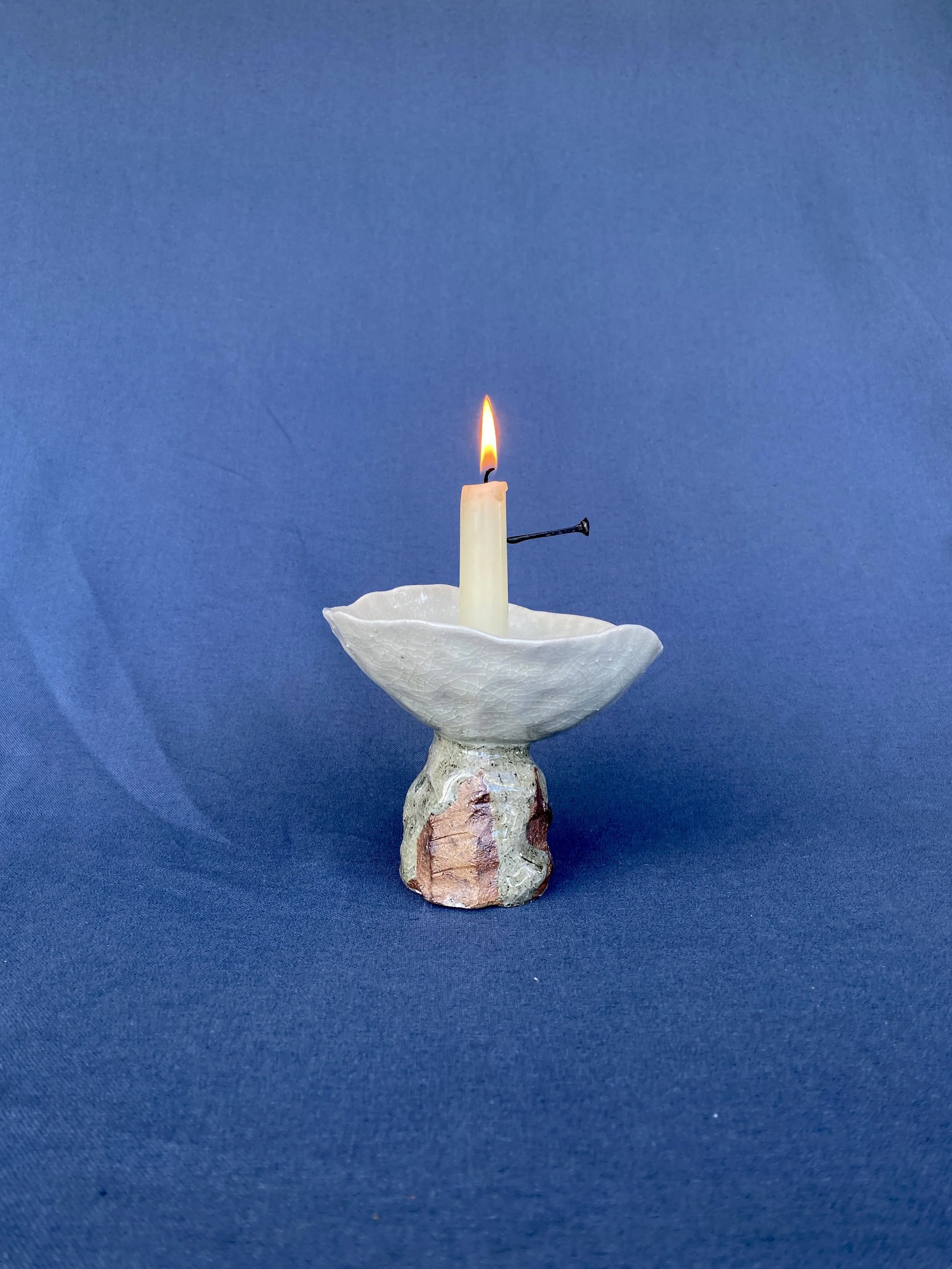
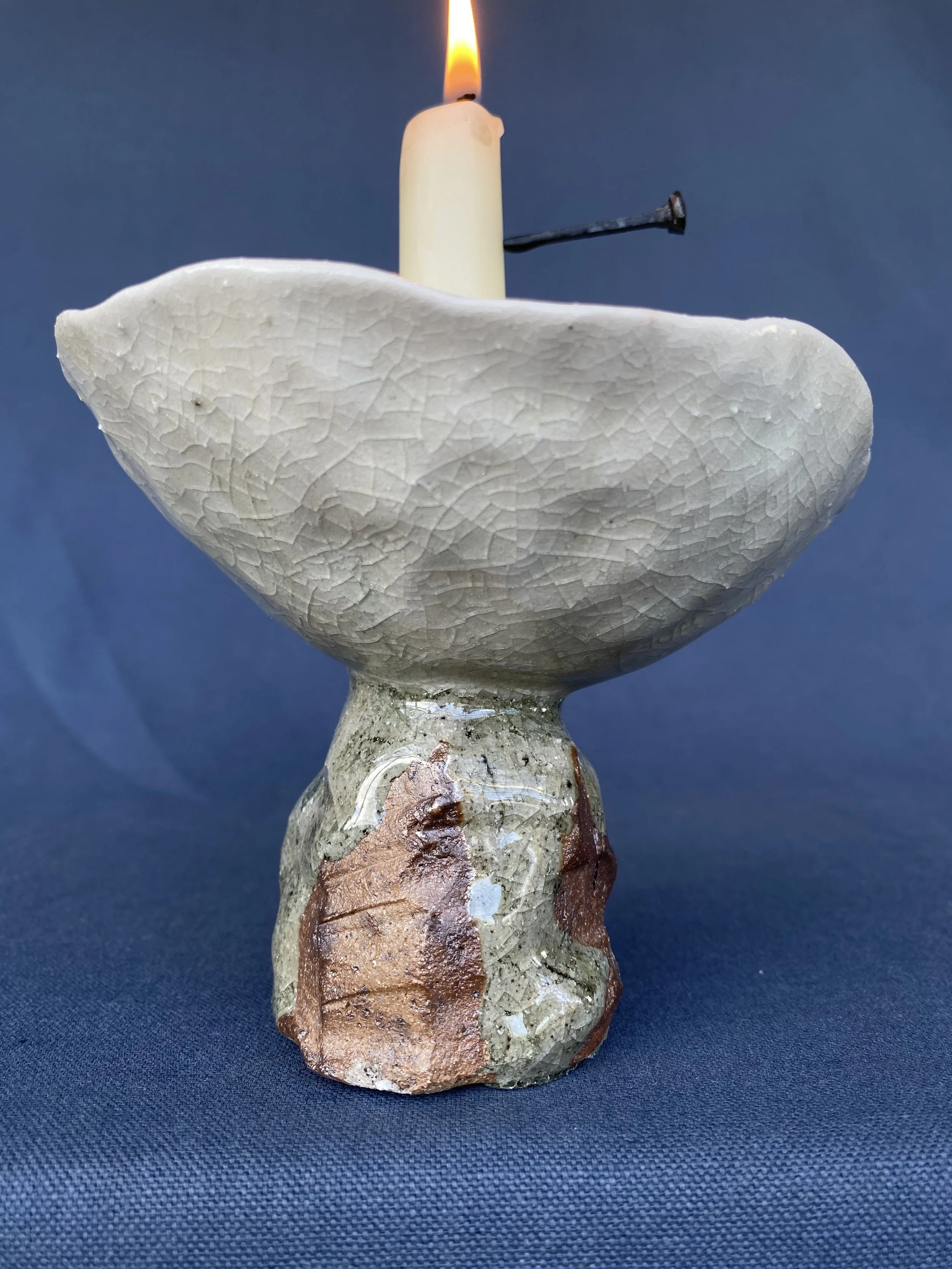
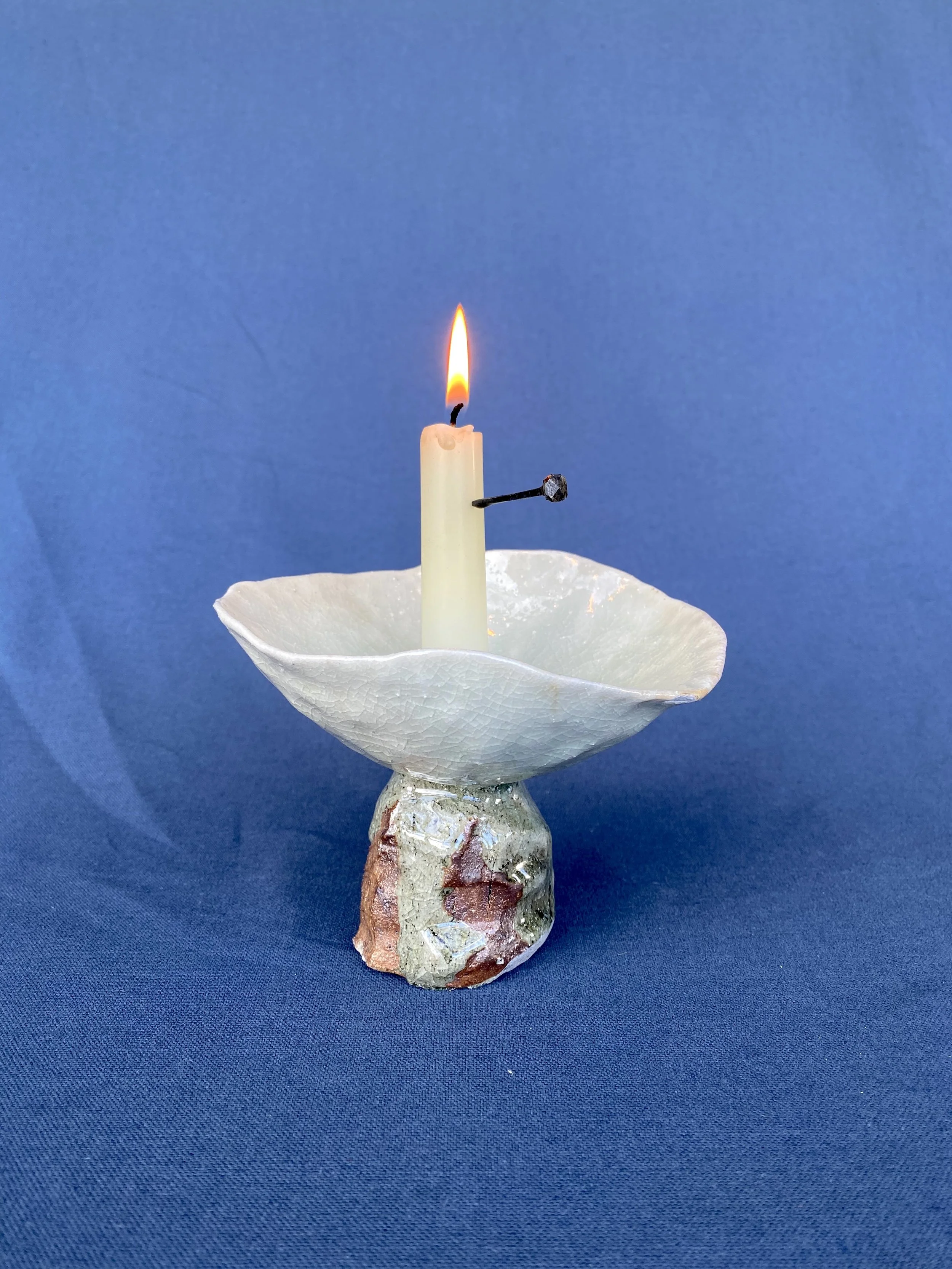
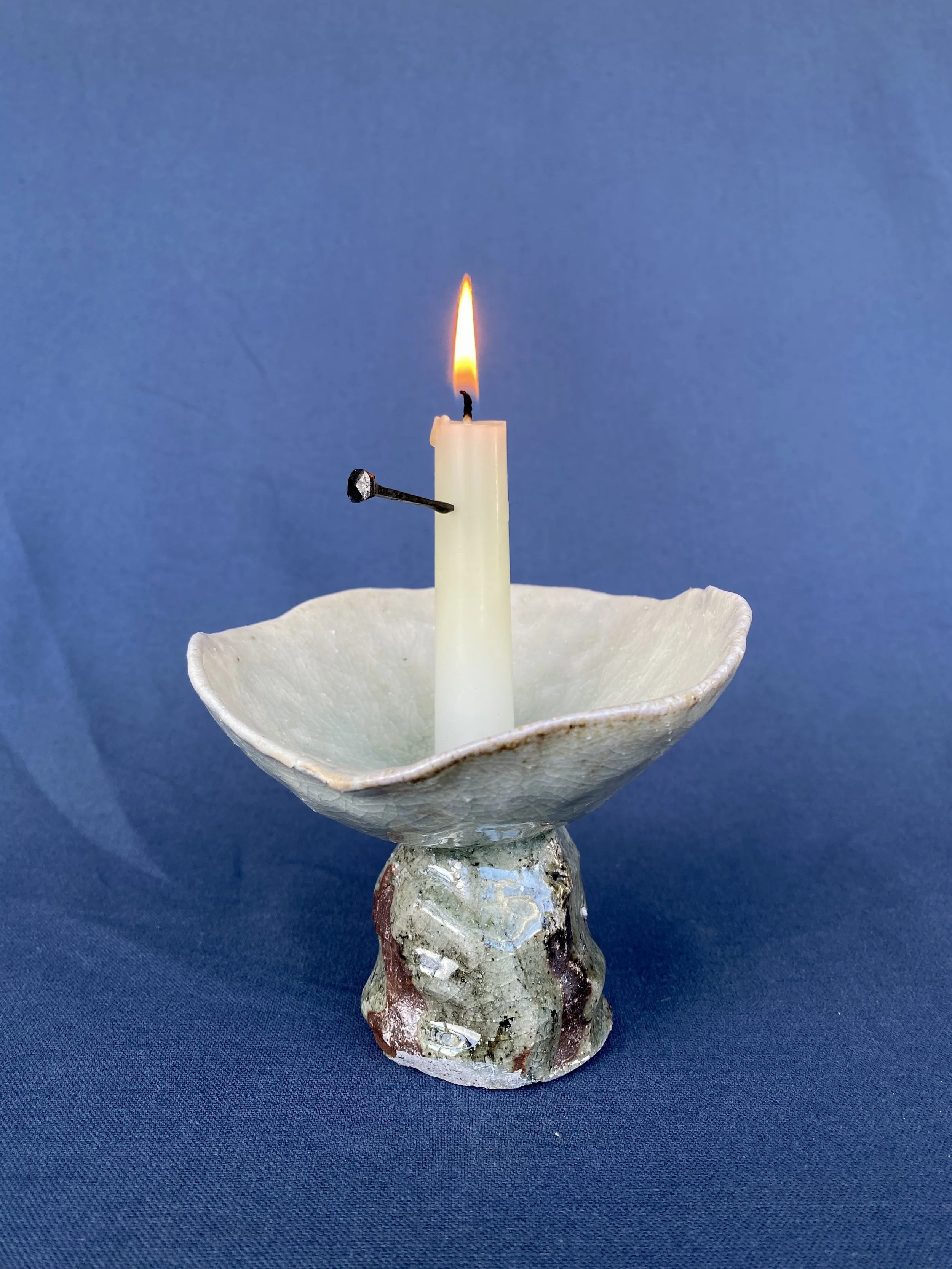
Candle clock, medieval timekeeping device - Uht (The period just before dawn)

£85.00

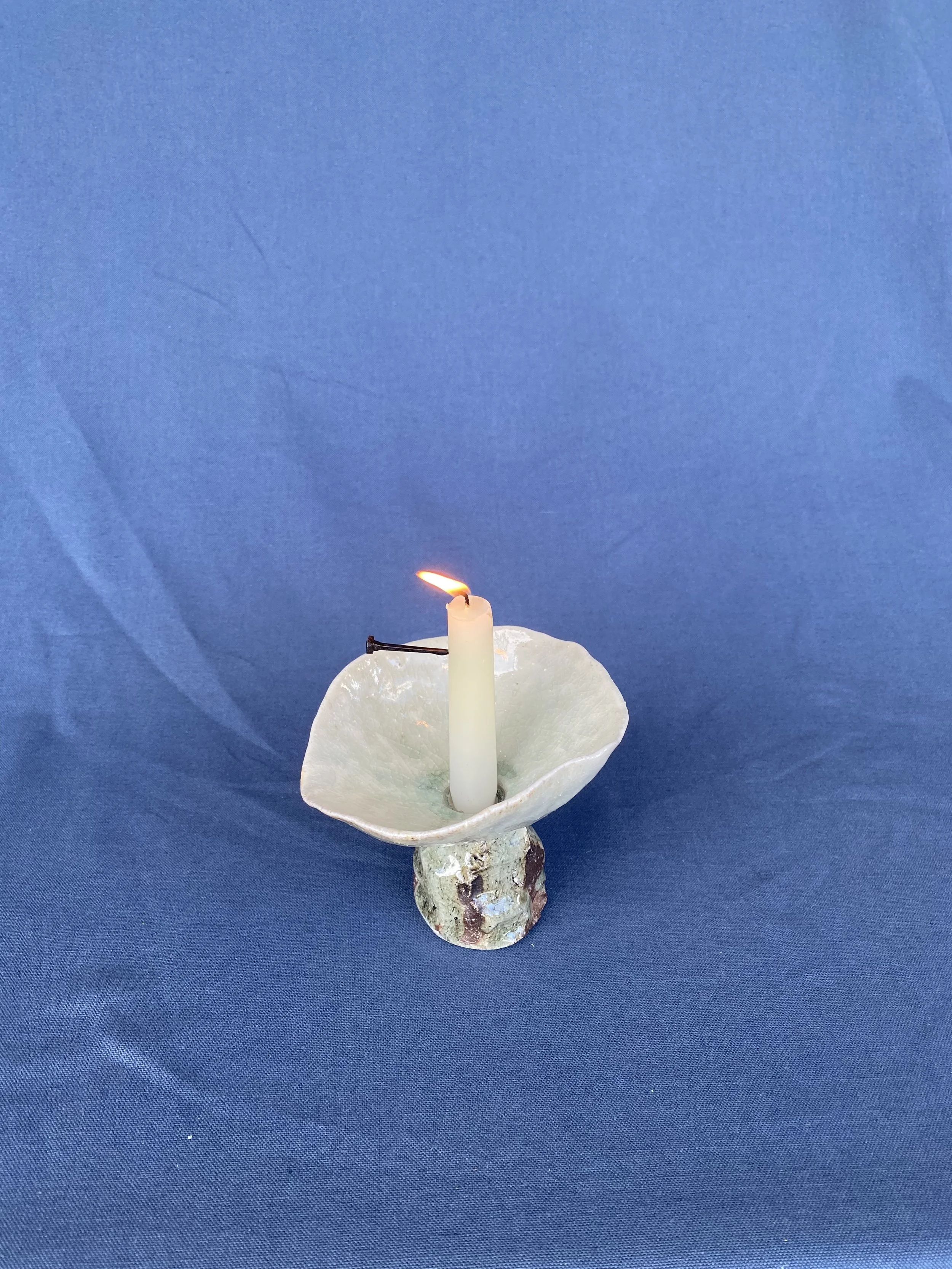
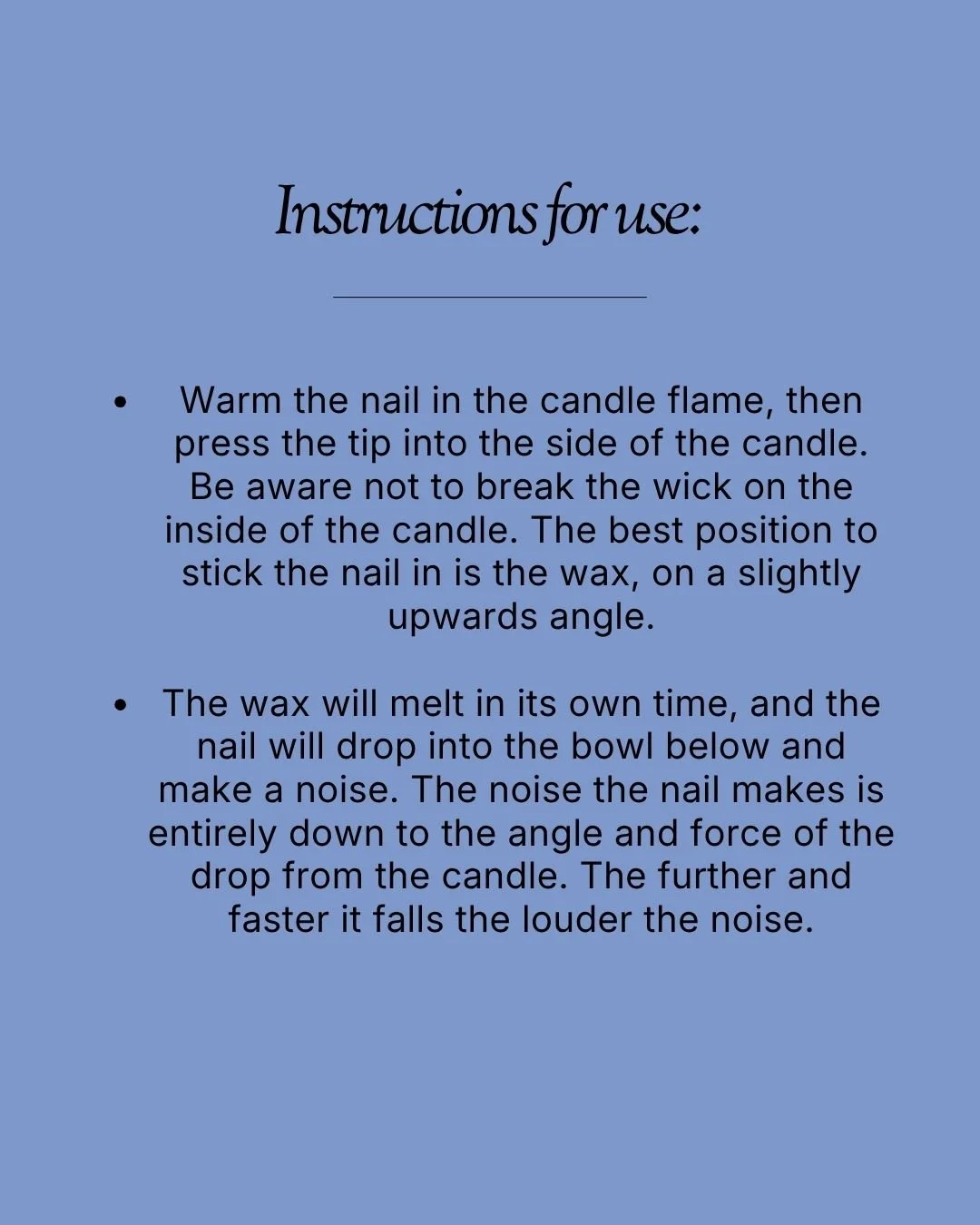
My own version of a very, very old object. It is said that Alfred the Great burned 6 candles a day to keep time, while in monasteries monks had candles pre-notched by the hour that sat inside thin metal bowls. To mark time a nail was placed in the notched wax so that when the candle burned down to the notch the nail fell out and made a noise in the bowl.

The Candle Clock could be a timer while you meditate, cook or as an entertaining centrepiece on a dinner table. Designed to bring us out of a digital world and into our present, the Candle Clock encourages warmth, while providing light and timekeeping.

  • Candle holder, comes with hand-forged nail.

  • Made from Dobels clay from St Agnes, and Wheal Martyn Clay from St Austell, Cornwall and Scarva clay.

  • Glazed with Celadon.

  • Wood Fired at Brickfields

  • 389 grams, 11.5 cm tall, 13.5 deep, 13 long

  • The Anglo-Saxon day starts at sunrise and ends at sunset. However, while they may have kept to the seven day week, daytime is more different. The Anglo-Saxon day is divided into eight (8) periods, three (3) hours each period. This equates to the twenty four (24) hours a day as we do today. However, the Anglo-Saxons go through the day observing these periods, and not the individual hours and minutes as we do today. Uht was 3am - 6am. (Anglo Saxons today.com)

Available for pre-order until Dec 5th. Please head here.

Order by 17th December for guaranteed UK Christmas delivery. Thank you.

Why is there a nail in this candle?

A simple iron nail remembers an old way of keeping time. For a thousand years monks set nails into candles to mark hours—each nail’s fall, each tiny clink, was an alarm for prayer, bread, or the end of a meditation. The candle becomes both clock and metronome: measure the burn, count the intervals, listen for the drop. Even Alfred the Great kept time this way. The nail in your candle is a quiet, tactile echo of that practice—ancestral, functional, and a reminder that time can be felt as much as seen.