 Image 1 of 4
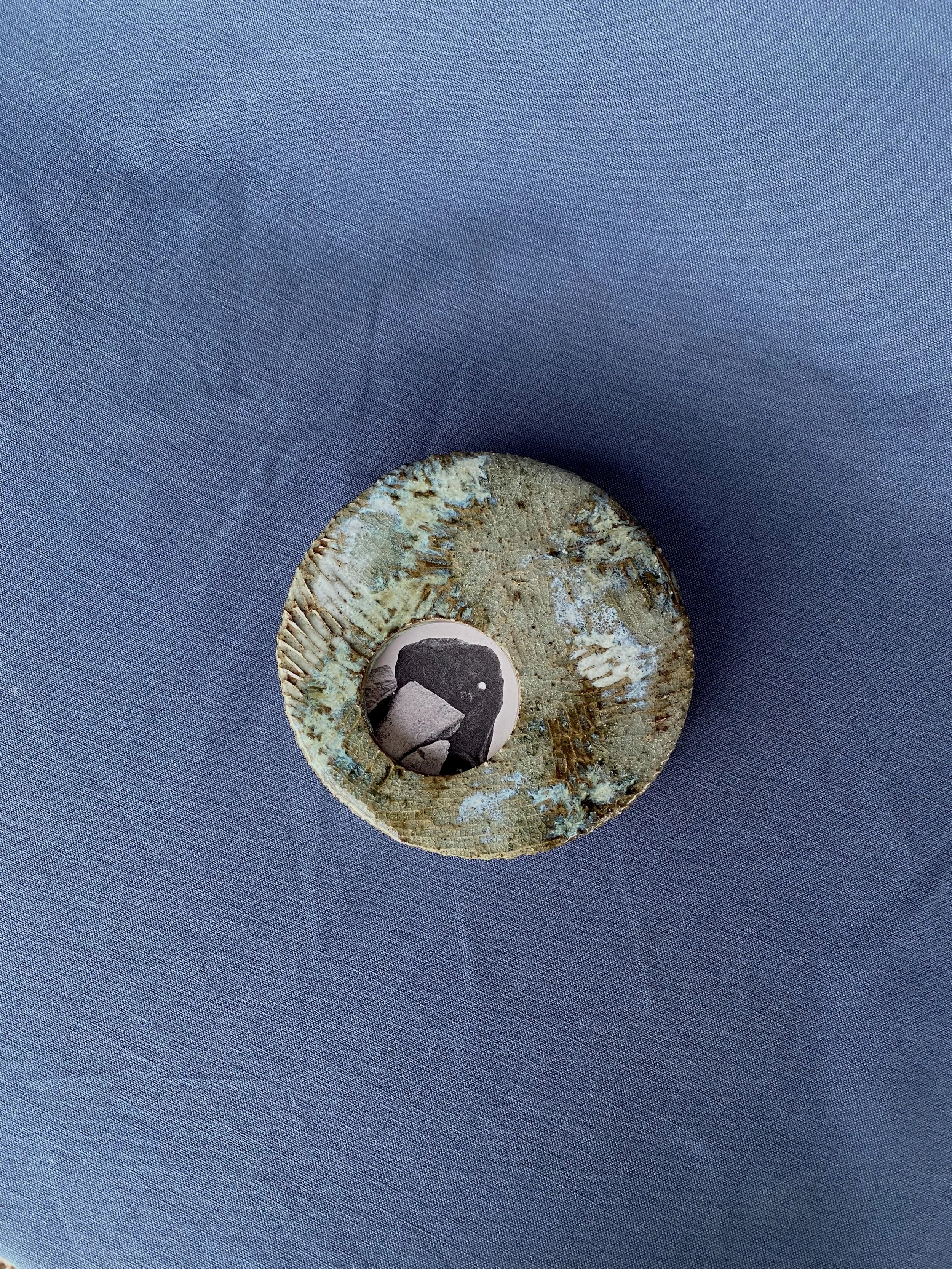 Image 2 of 4
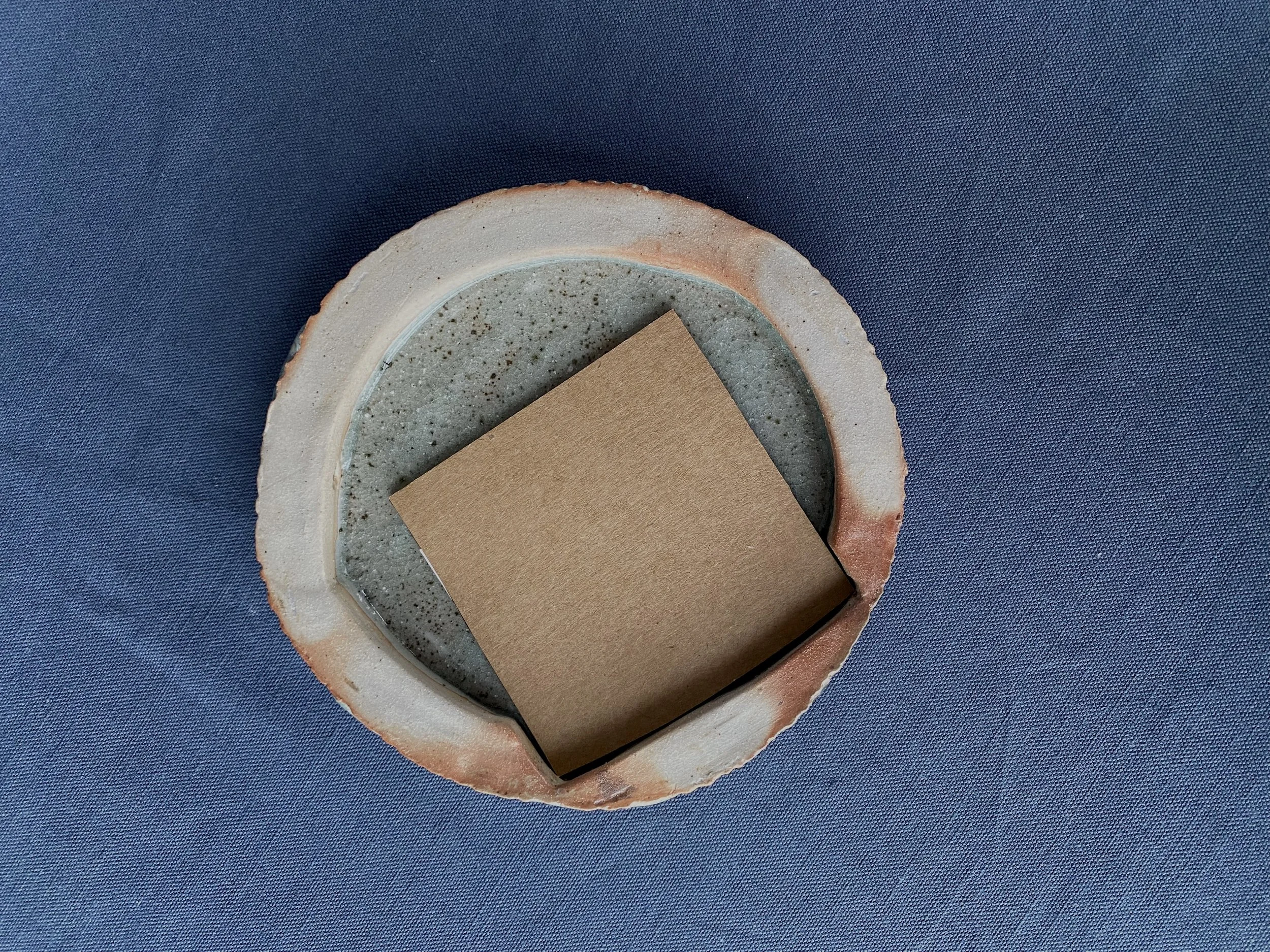 Image 3 of 4
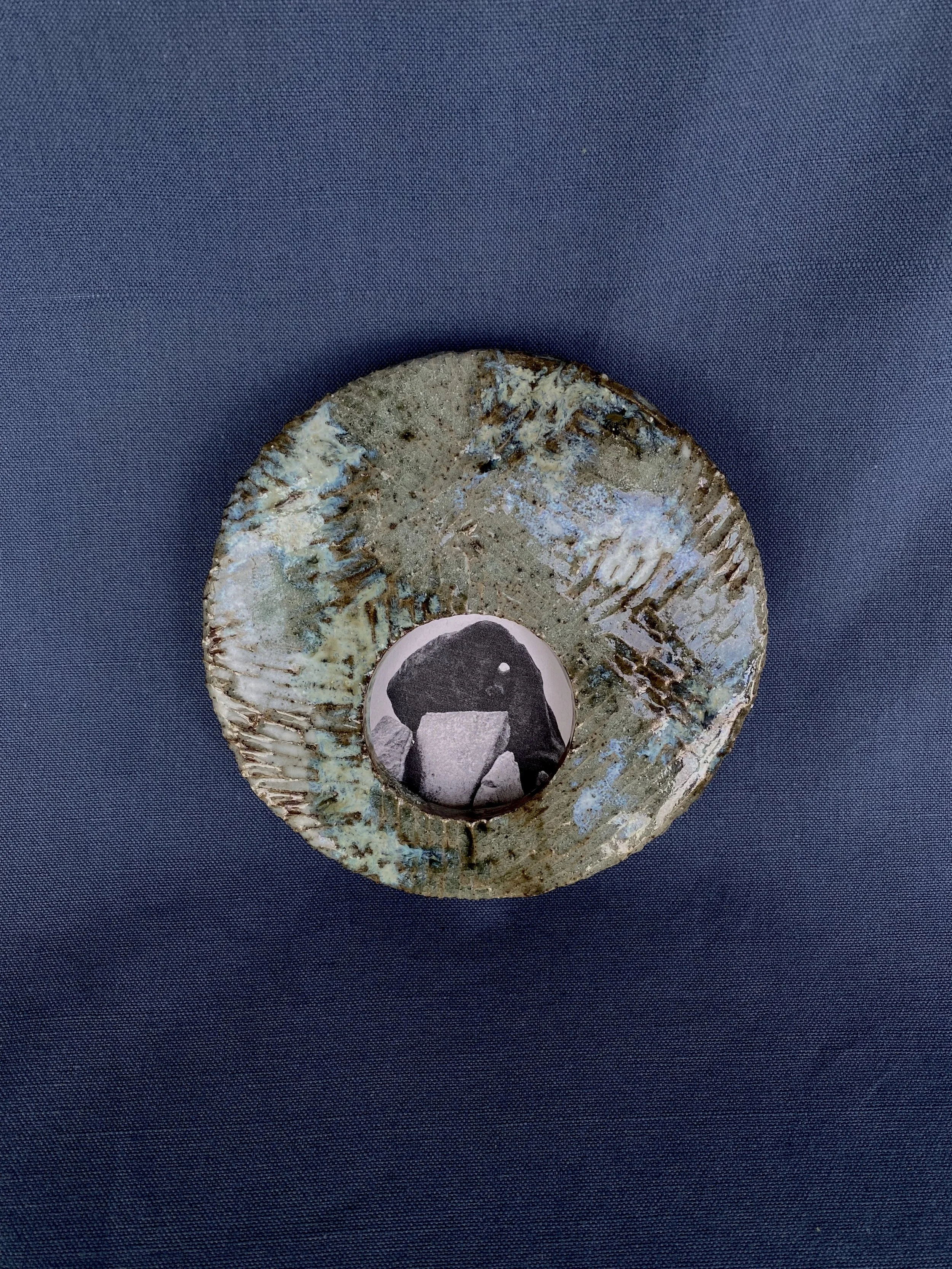 Image 4 of 4
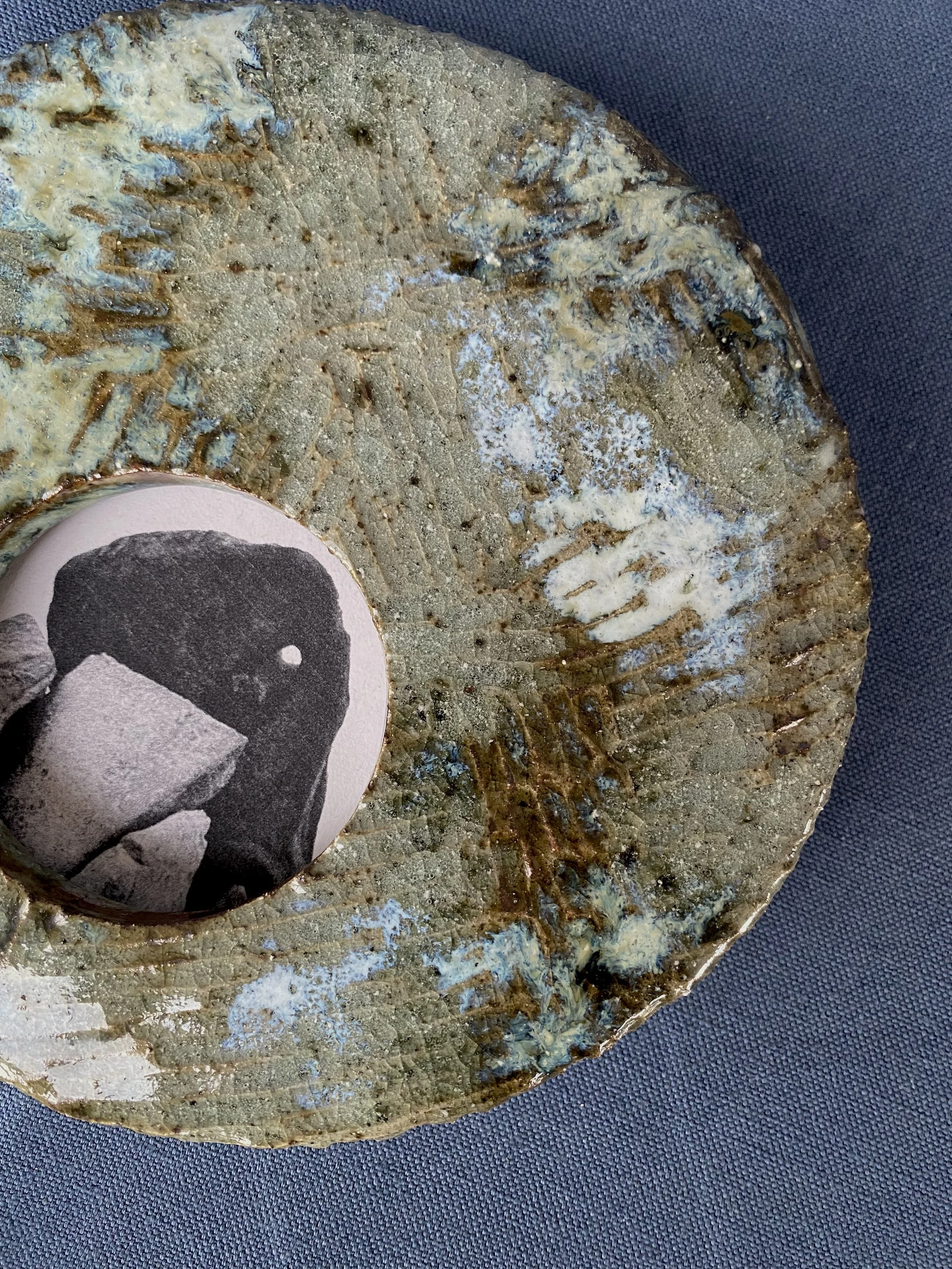
Made from Dobles clay from St Agnes
Glazed with layered Celadon glazes.
Wood-fired at Brickfields
716 grams, 2.5cm tall, 17 deep, 21.5 long
Hung from the wall via a metal string attachment.
Image held in place with a ceramic slot, easily changeable.
The image inside the frame is a in image of Trethevy Quoit, located near St Cleer, Cornwall. Excavations have shown that quoits such as this were constructed in the early and middle Neolithic period between 3700-3300 BC. They were used over long periods as communal tombs or ossuaries to house the bones of the ancestors. [Cornwall Heritage Trust]
This item will be shipped after the St. Cloud exhibition ends on the 9th of November.