Candle clock, medieval timekeeping device - Dægmæl (Day-mark)

£85.00
Sold Out

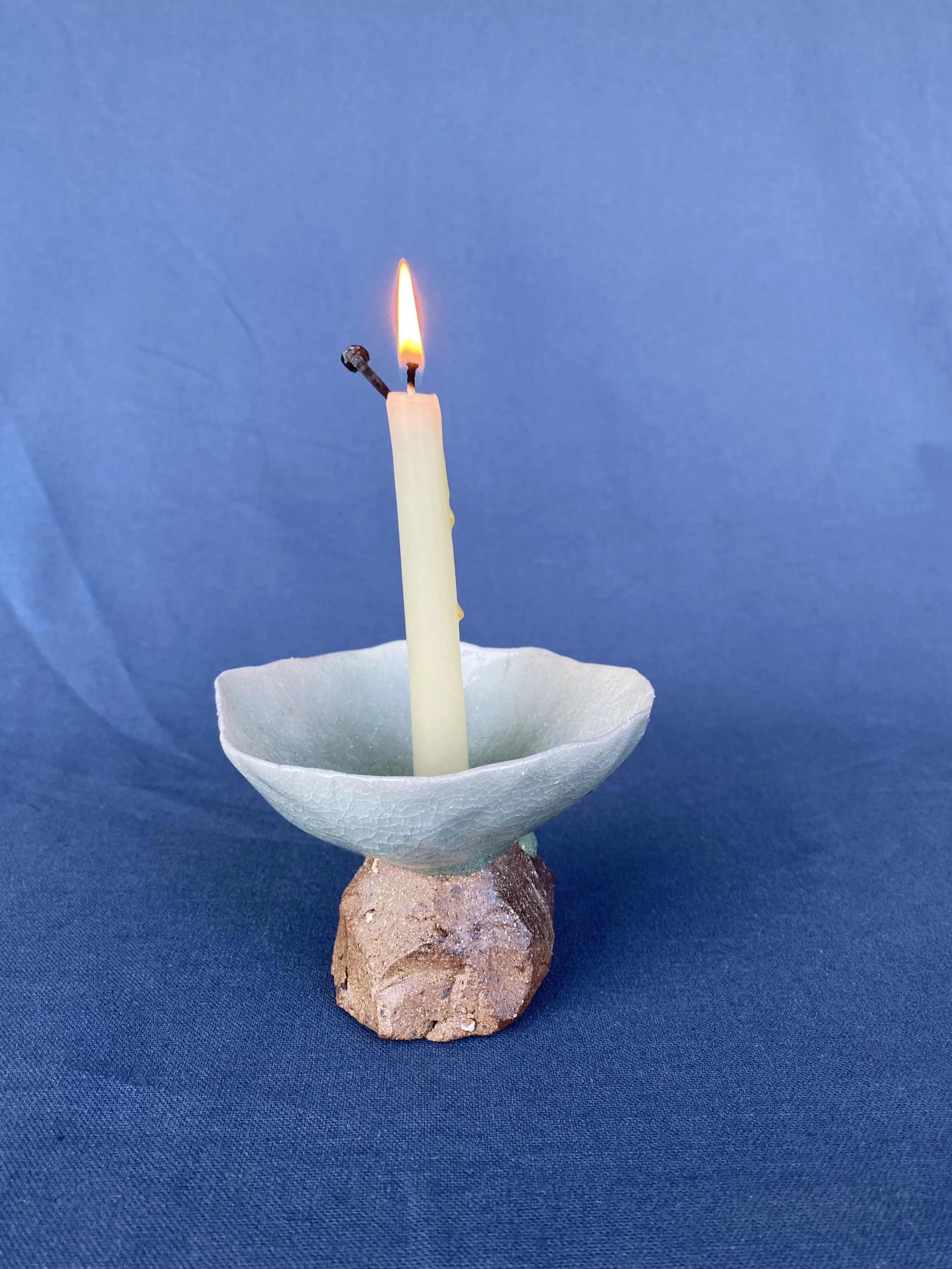
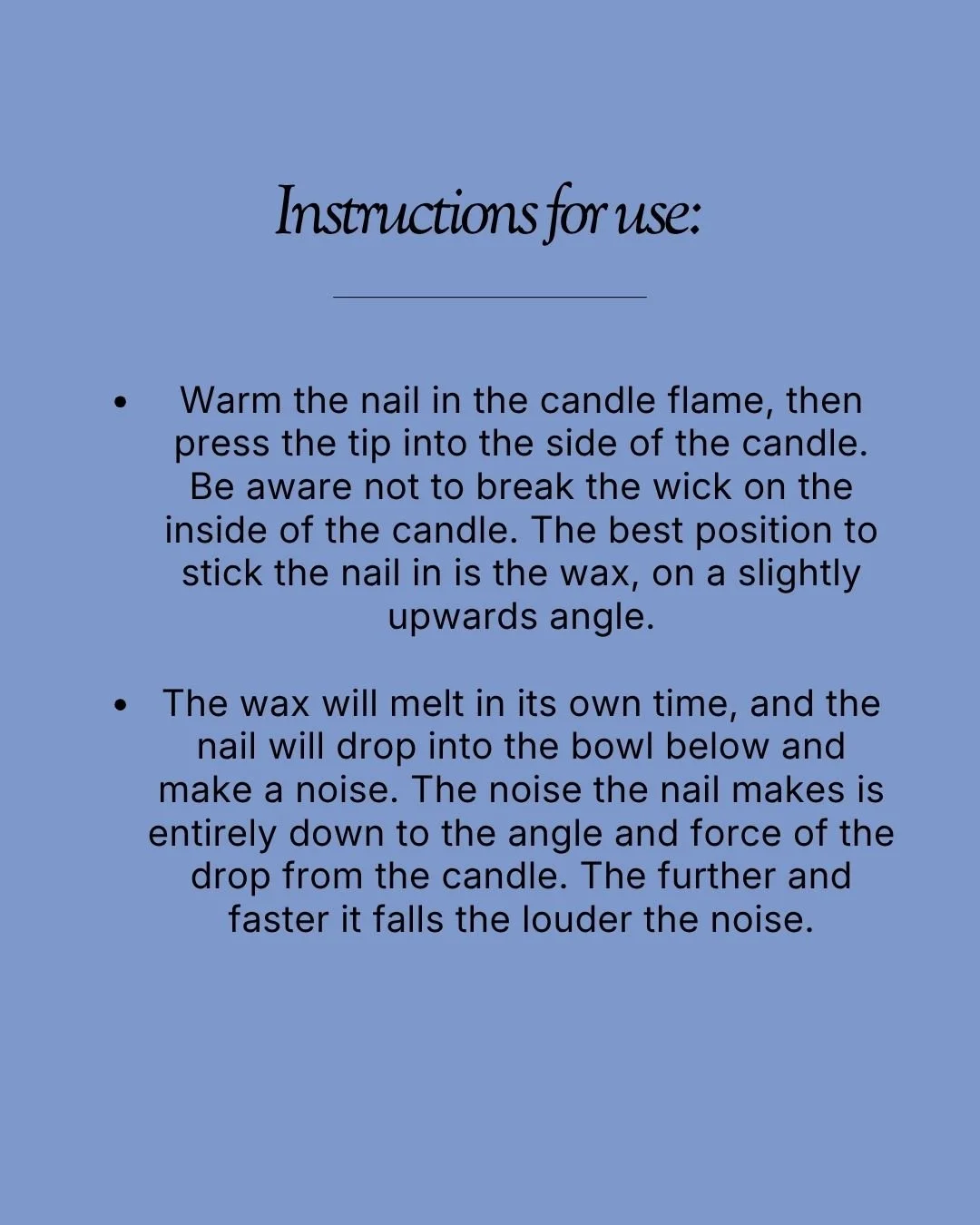
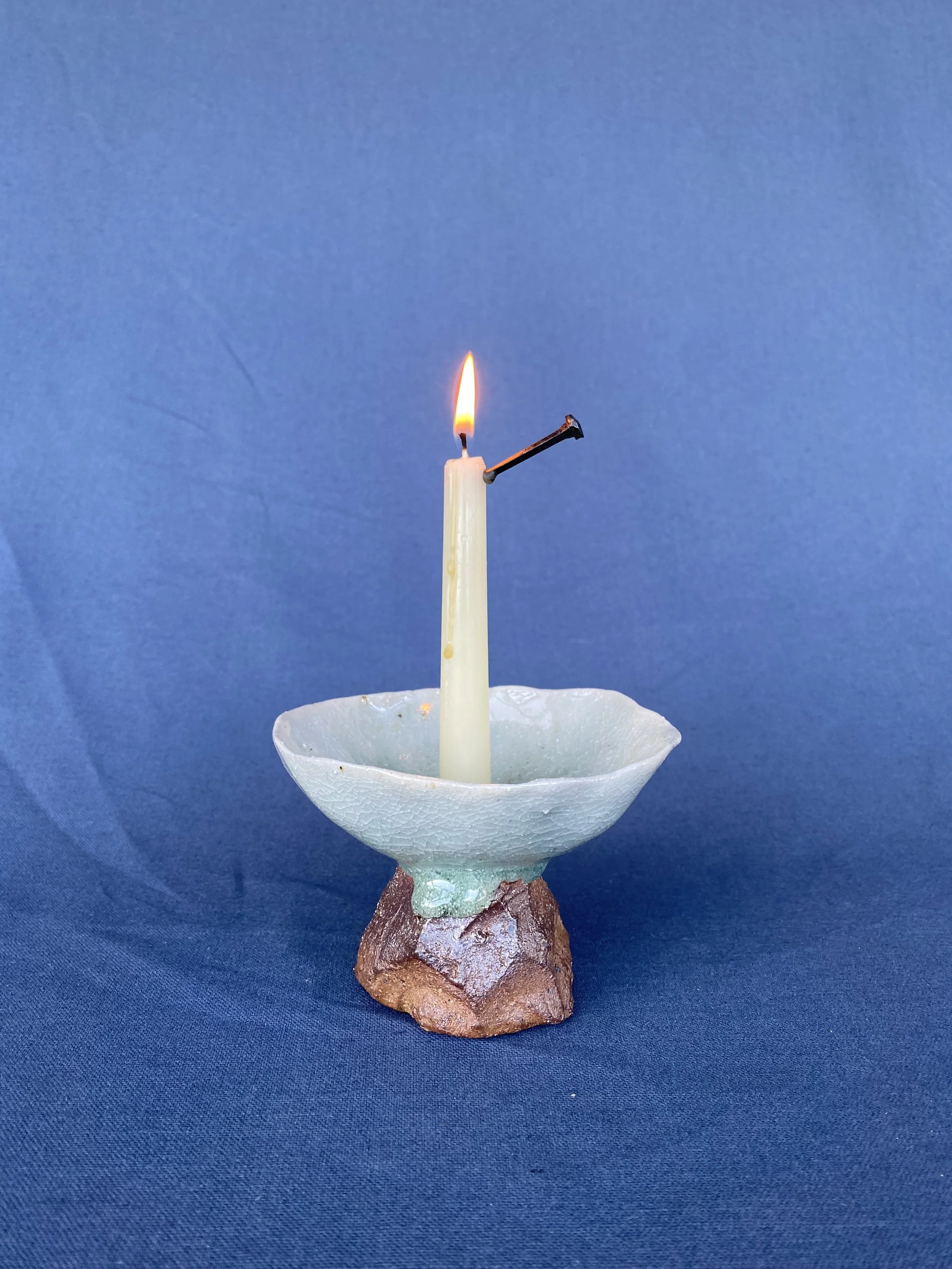
My own version of a very, very old object. It is said that Alfred the Great burned 6 candles a day to keep time, while in monasteries monks had candles pre-notched by the hour that sat inside thin metal bowls. To mark time a nail was placed in the notched wax so that when the candle burned down to the notch the nail fell out and made a noise in the bowl.

The Candle Clock could be a timer while you meditate, cook or as an entertaining centrepiece on a dinner table. Designed to bring us out of a digital world and into our present, the Candle Clock encourages warmth, while providing light and timekeeping.

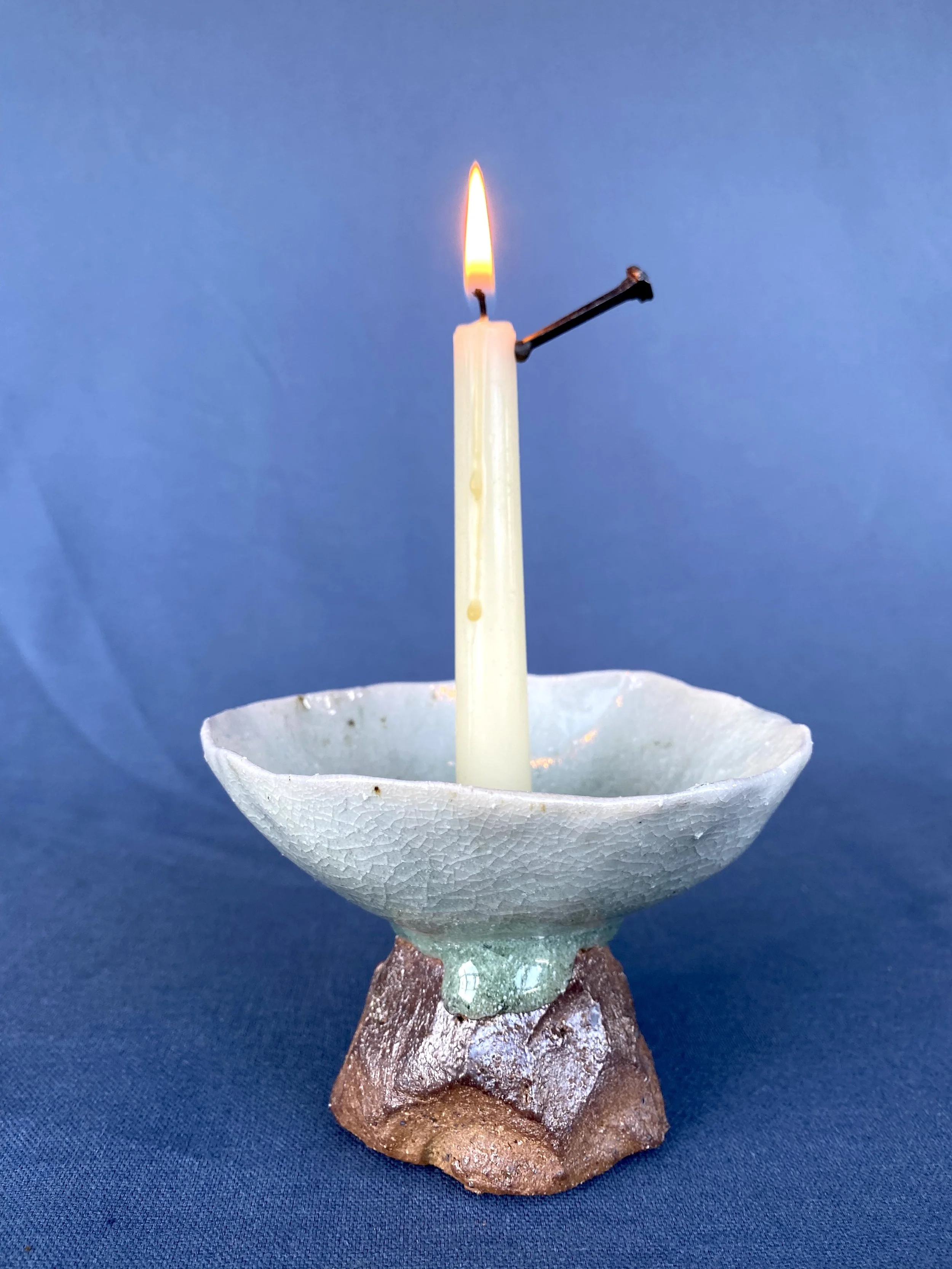
  • Candle holder, comes with hand-forged nail.

  • Made from Dobels clay from St Agnes, and Wheal Martyn Clay from St Austell, Cornwall and Scarva clay.

  • Glazed with Celadon.

  • Wood Fired at Brickfields

  • 301 grams, 8.4cm tall, 11.8 deep, 11.4 long

  • Dægmæl (Day-mark) is the Anglo-Saxon term for a sundial. Rather than saying "it is three o'clock," a Saxon would refer to the position of the shadow on the dægmæl. Surviving Anglo-Saxon church walls frequently feature carved "tide dials" to show when services were held.

This item will be shipped after the St. Cloud exhibition ends on the 9th of November.

Why is there a nail in this candle?

A simple iron nail remembers an old way of keeping time. For a thousand years monks set nails into candles to mark hours—each nail’s fall, each tiny clink, was an alarm for prayer, bread, or the end of a meditation. The candle becomes both clock and metronome: measure the burn, count the intervals, listen for the drop. Even Alfred the Great kept time this way. The nail in your candle is a quiet, tactile echo of that practice—ancestral, functional, and a reminder that time can be felt as much as seen.