A path in
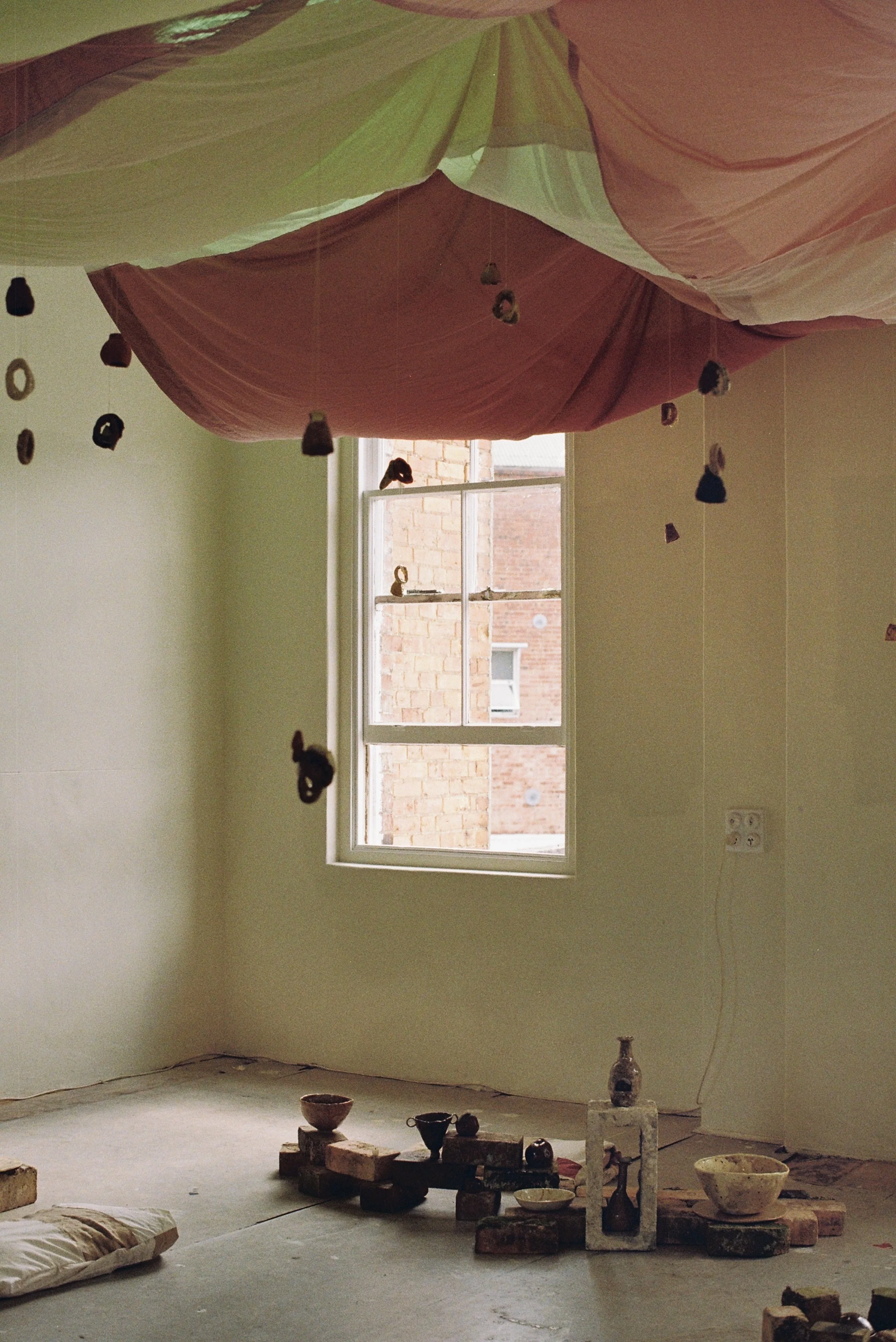
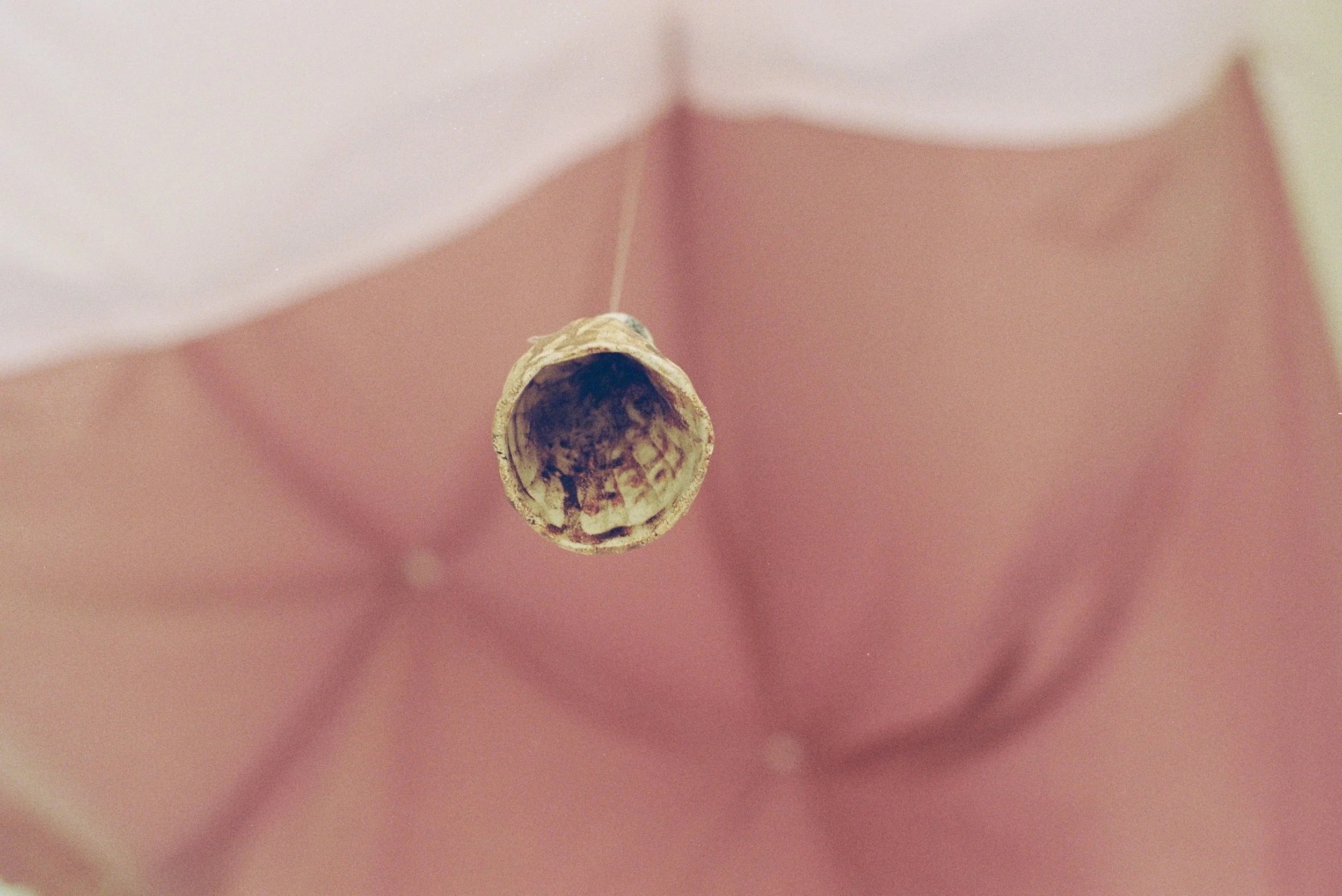
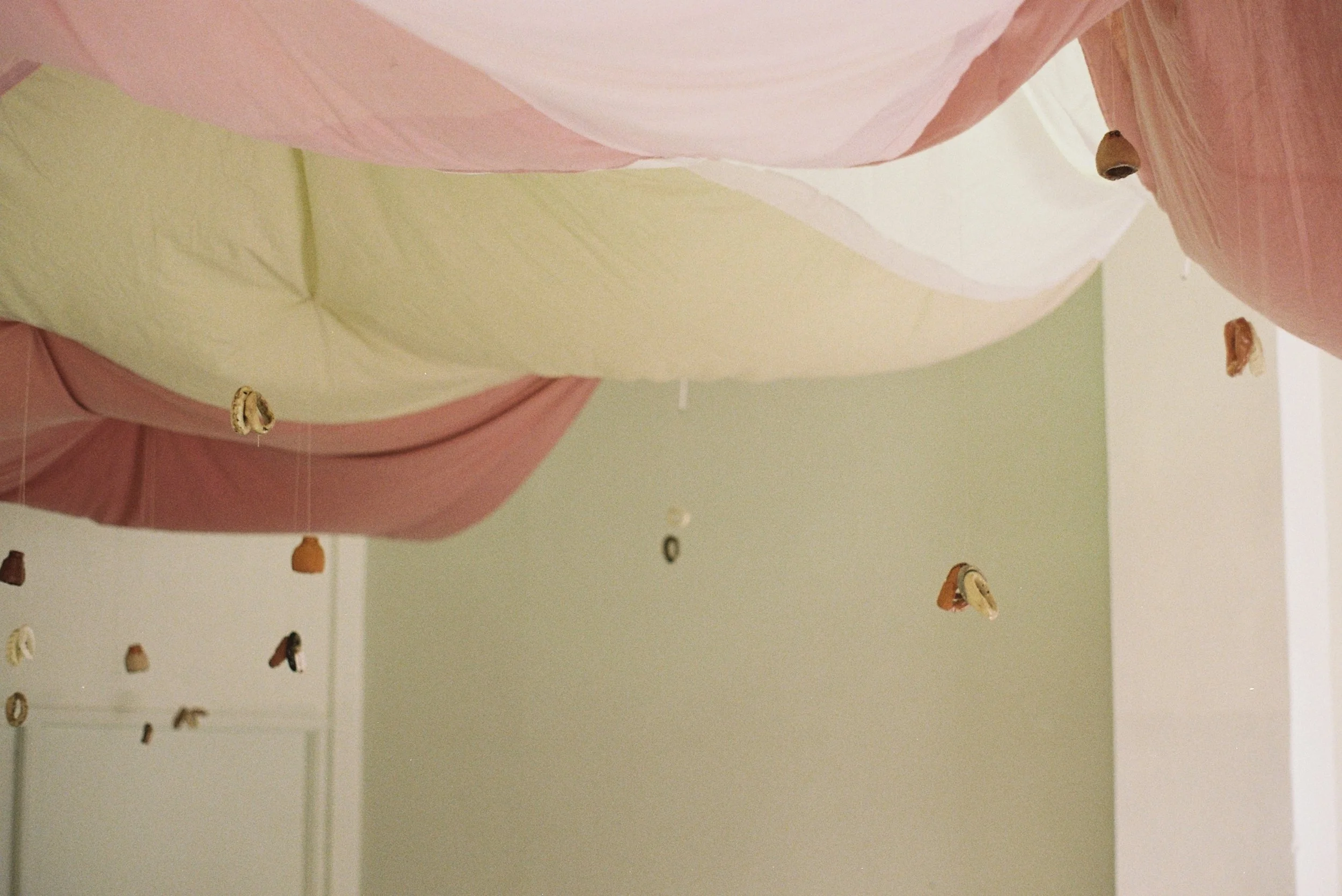
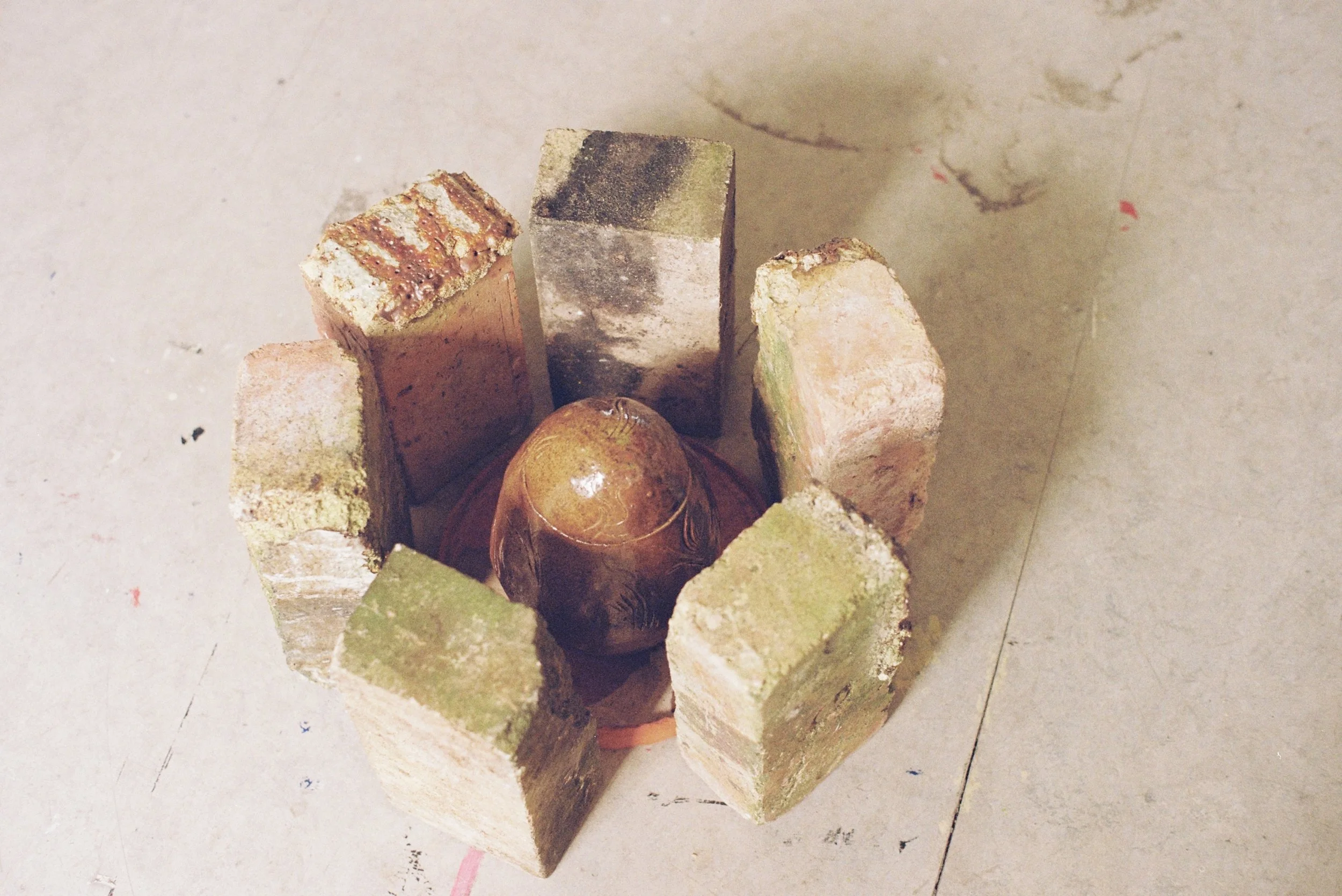
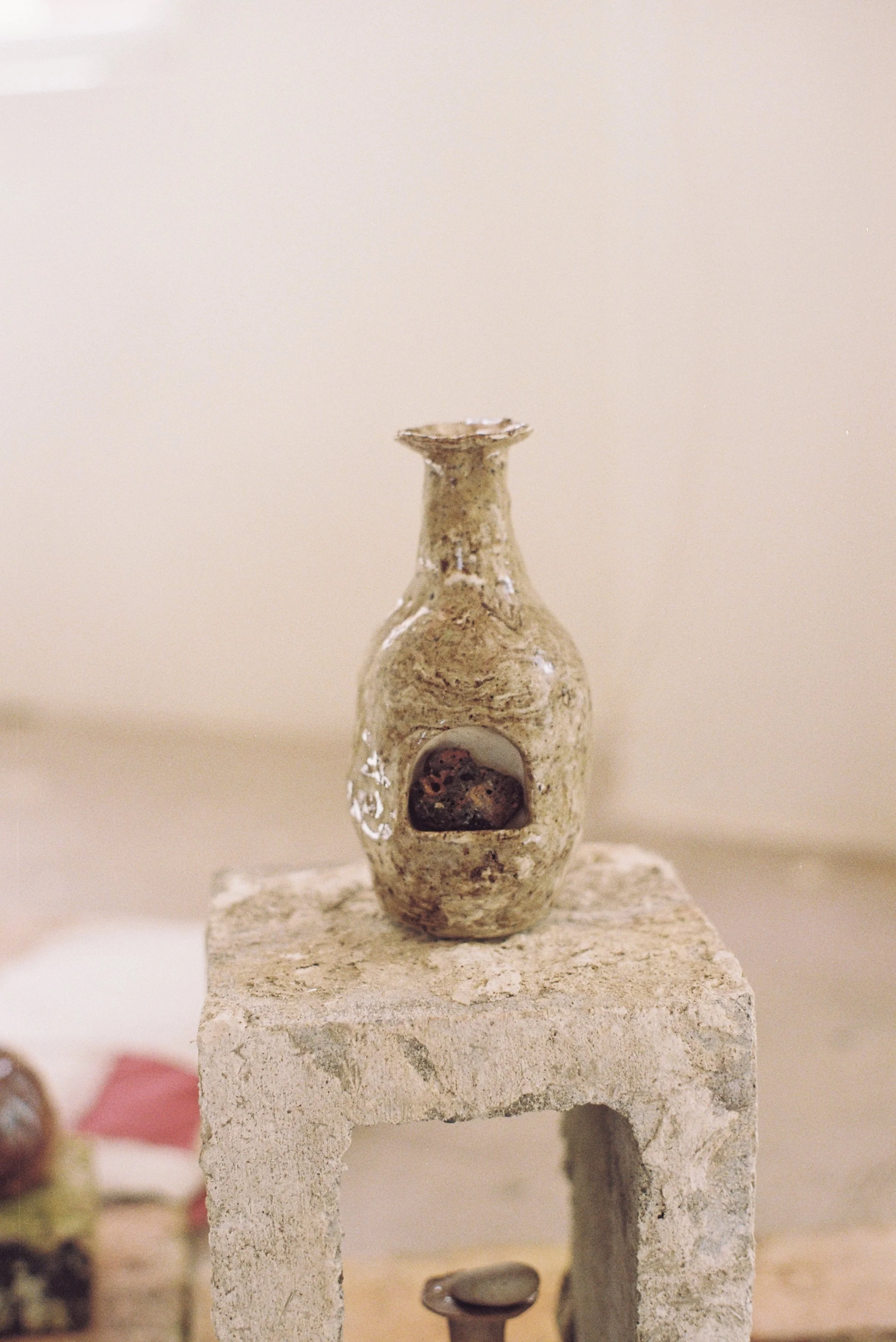
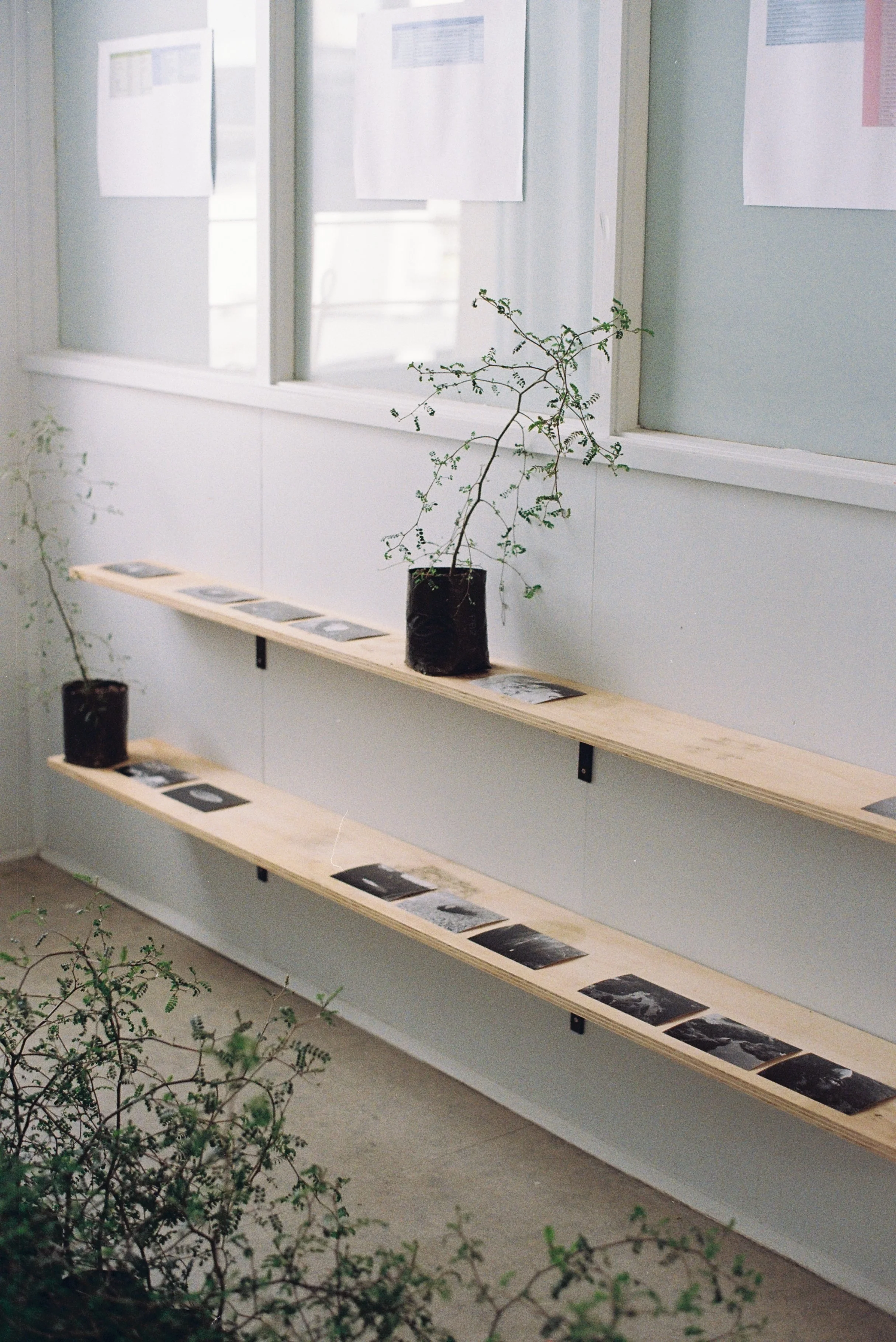
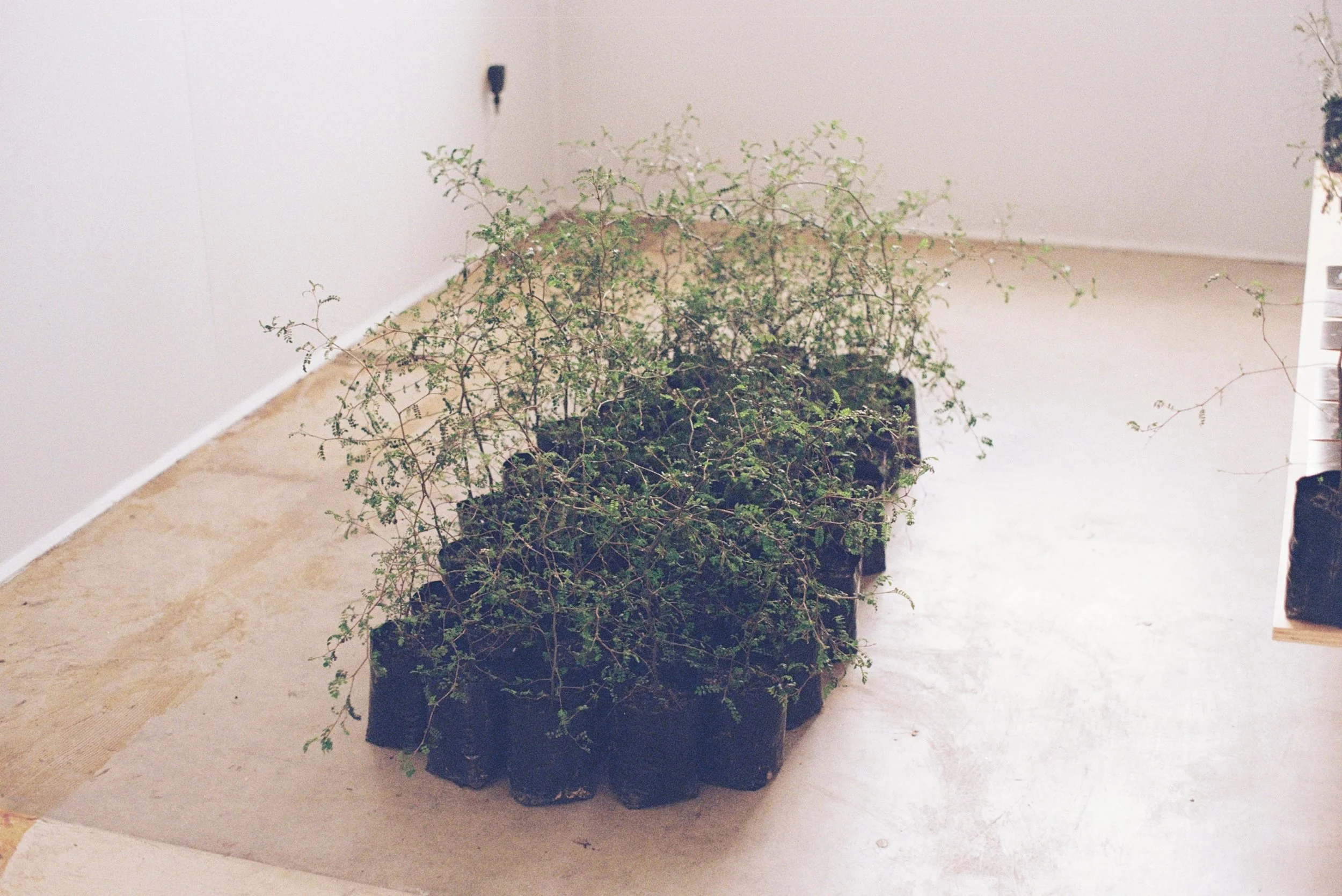
A Path In, Laurel Projectspace (solo), Dunedin, New Zealand, November 2019.
To touch clay is to feel the world. Caitlin Clarke’s A Path in reminds us that pots are material manifestations of the earth, and that we, as humans are connected within this ecosystem: ‘As human beings we inhabit an ineluctably material world. We live our everyday lives surrounded by, immersed in, matter. We are ourselves composed of matter.’

Sedimentality
Written by Milly Mitchell-Anyon, 2019
To touch clay is to feel the world. Caitlin Clarke’s A Path in reminds us that pots are material manifestations of the earth, and that we, as humans are connected within this ecosystem: ‘As human beings we inhabit an ineluctably material world. We live our everyday lives surrounded by, immersed in, matter. We are ourselves composed of matter.’
Clarke is from Ōtautahi and studied at the University of Canterbury’s Ilam School of Fine Arts, graduating in 2017. Since graduating, Clarke has been busy with exhibitions at both RM and Corban Estate Arts Centre in Tāmaki Makaurau, The Physics Room in Ōtautahi, and now here in Ōtepoti at Laurelprojects. This current project of Clarke’s emerges from a prolonged period of thinking about our cohabitation and relationship with the environment. A Path in is an installation that traverses ideas about resource management, self-care, the materiality of clay and the memories that are carried with place.
The pots that Clarke has been making for this exhibition are made from clay that has been sourced from sites that are significant to the artist. These pots have then been re-dispersed across Te Waipounamu – to new homes. From Godley Head in Awaroa to Te Waewae Bay in Riverton, these pots have returned from their sabbatical with Clarke and are now slowly being reconnected with the earth. In a sense, this process of sharing the clay between different sites is a form of relationship building between the individual sources of matter.
The act of looking and the process of feeling is fundamental to Clarke’s practice. To walk, looking for seams of clay, involves paying attention to the subtle variations in the colour and surface texture of the ground. Clarke’s process of ‘foraging’ for clay is led by an intuitive sense of knowing where to go. Feeling may not be considered a scientific methodology to explain her process, but for Clarke it is appropriate. Finding the best clay may not necessarily mean it is the right clay – it is more important to feel a connection, a sense of sentimentality, to the clay.
The pots themselves carry with them place, both materially and conceptually. Handbuilt by Clarke, they are made entirely from the found clay – rather than, as Clarke refers to it as ‘an $80 bag of dead clay.’ Perhaps this clay is not dead, but forcibly stripped of its identity. Working in a similar vein is artist Dave Marshall, who also uses found clay. His collection methodology involves literally tracing the footsteps of potters. For instance, Marshall walks in the bushy surrounds of Pukerua Bay to find the seam of clay that Mirek Smíšek used. This low-impact action of walking, taking the time to connect and build relationships to place operates in a similar fashion to Clarke.
In the 1980s, there were mounting protests in ceramic circles that ‘pots had “no clay feeling”, that they simply demonstrated technical excellence rather than the signs of the handmade that had come to signify a good pot.’ Hand-making is central in Clarke’s practice, to make the works by hand is to touch, to nurture the clay. This process of hand-building rejects the mechanised:
The handmade ceramic is an art statement that references pre-industrial traditions, even if only by virtue of the forms, techniques or materials employed. It can be viewed as subversive, by being rendered in a medium as loaded with pre-conceptions as clay.
Clarke recognises that this act of finding and extracting clay is also inherently an act of ‘taking’ and carries its own problems. Some potters are secretive about their sources of clay – for instance, only a handful of people knew about Smíšek’s seam of clay. This might be an anxious reaction about access to commodifiable resources. This feeling of ownership of clay and land connotes a certain colonial-spirit that continues to live on in our neoliberal society.
When we think about a pot, our emphasis is placed on the product and usually not the process, as theorist Diana Coole highlights: When we think about a pot, our emphasis is placed on the product and usually not the process, as theorist Diana Coole highlights:
Human artifacts and natural objects are generally just treated as the taken-for-granted material background and paraphernalia of our everyday lives. We rarely pause to consider the contingent processes through which our familiar, visible world comes into being, not only through the hard labor of production and the economic hierarchies that structure it, but also via the creative contingencies of perception.
To mitigate this, Clarke only takes what she needs, and only borrows it – eventually returning the clay back to the earth in the form of a pot. Rather than the continuous re-extraction from a seam of clay, Clarke only returns to the site to visit, or returns sometimes to plant a tree in the absence of the clay – in order to maintain a relationship of reciprocity with place.
By returning the clay, Clarke is also fundamentally bypassing the economies of the art market and the burgeoning market for ceramics consumption. Through the eventual destruction of the work, the clay is taken out of this potential economic cycle. It interrogates the Western viewpoint that ‘nature’ is a mute object, able to be depredated and monetised perpetually. In this increasingly precarious world, Donna Haraway notes the importance of ‘making kin.’ She advocates to ‘make “kin” mean something other/more than entities tied by ancestry or genealogy […] Kin-making is making persons, not necessarily as individuals or as humans.’ Clarke’s treatment of clay as living is tied to this idea: ‘I try to imagine myself as an open circuit, as not just a body on the earth but part of the earth.’ A Gentle World investigates these possibilities and documents this ongoing process of connecting as, and creating, kin.
Milly Mitchell-Anyon, 2019. In written for with A path in, at Laurel Projectspace, November 2019.
List of Cited Works
Coole, Diana and Samantha Frost, “Introducing the New Materialisms” in New Materialisms : Ontology, Agency, and Politics, Diana Coole and Samantha Frost (eds.), Durham, NC: Duke University Press, 2010, 1-44.
Coole, Diana, “The Force of Materiality” in New Materialisms : Ontology, Agency, and Politics, Diana Coole and Samantha Frost (eds.), Durham, NC: Duke University Press, 2010, 45-136.
Elliott, Morya, “The mutable handmade” in Clay Economies, Richard Fahey and Philip Clarke (eds.), Auckland, NZ: Six Point Press, 2008, 41-56.
Email correspondence with the artist, 15 October 2019.
Haraway, Donna, “Anthropocene, Capitalocene, Plantationocene, Chthulucene: Making Kin” in Environmental Humanities, Vol. 6 (2015), 159-165.